

On the Mat: Learning About the Dutch Youth Welfare System Through Play
April 9, 2026
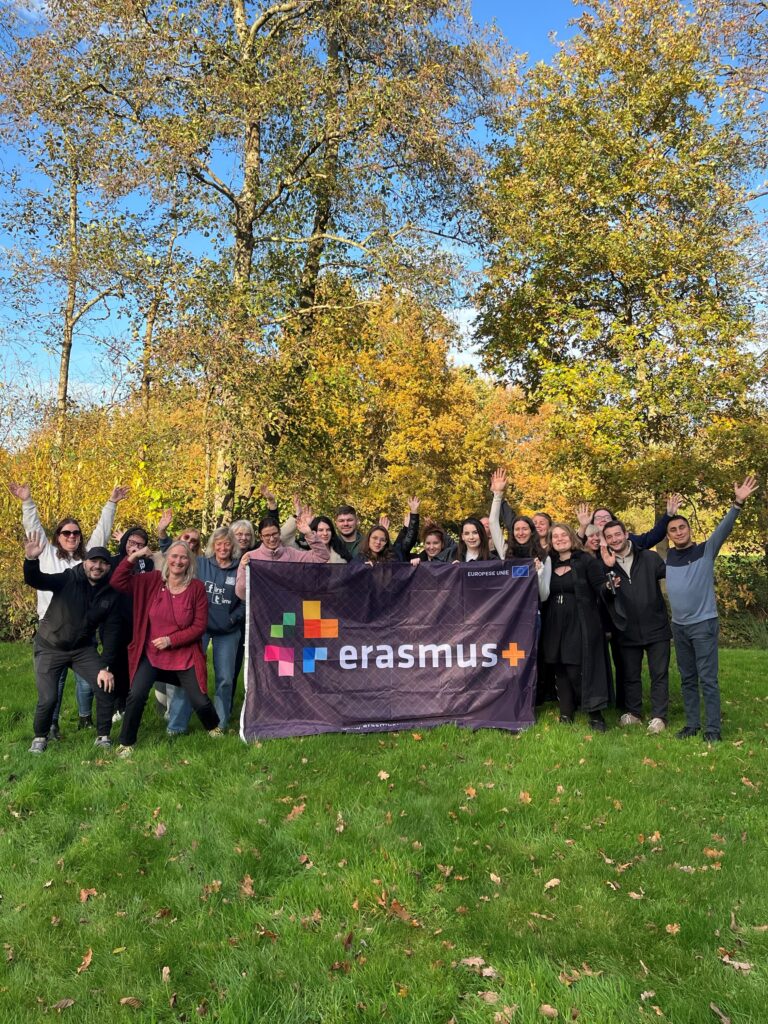
During international exchanges, the Kinderperspectief Foundation kept encountering the same question: how do you make a complex system understandable to people who don’t work with it on a daily basis? To bridge that gap, Kinderperspectief developed a unique teaching tool: a large game board that visually and clearly depicts the Dutch youth support system. From preventive support to specialized youth services and agencies such as the Child Protection Board. The entire landscape is visible at a glance.

INTERNATIONAL EXCHANGE
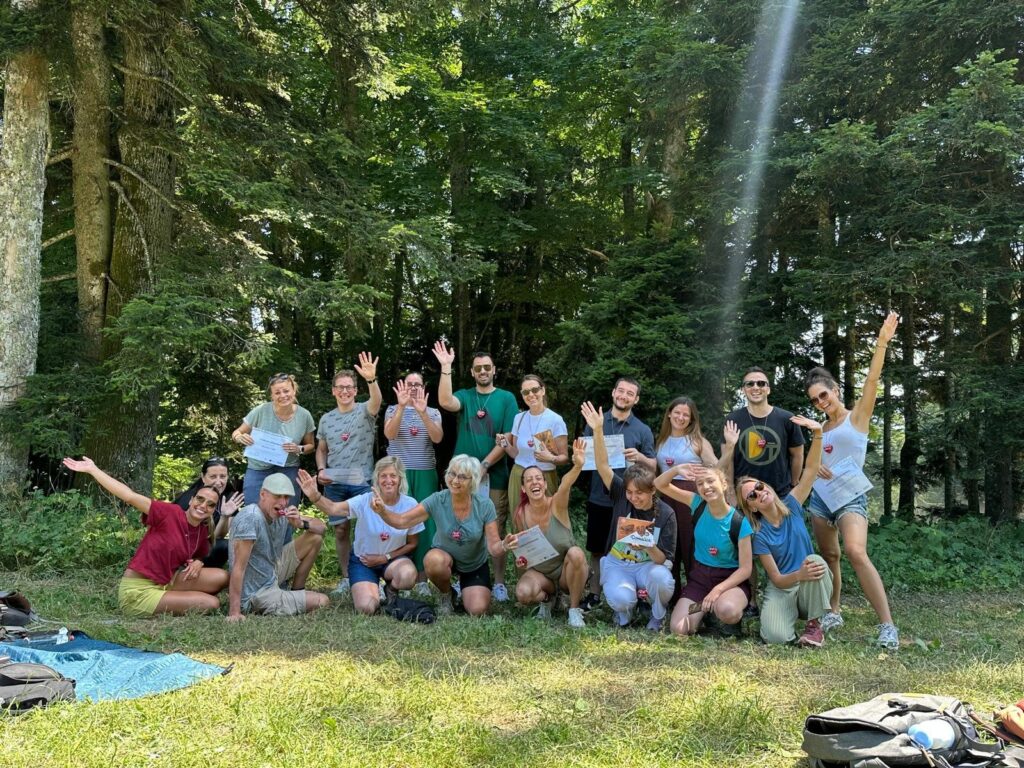
The strength lies in the approach. On this mat, which is about ten square meters in size, the system is literally at your feet. Using real-life cases as a starting point, participants move through the various steps of the youth services system. They follow the paths a child might take and see along the way what choices, referrals, and collaboration mean in practice.
Bas Rodijk, project manager at Kinderperspectief, explains: “By literally stepping onto the mat, professionals get a sense of just how many parties are sometimes involved in a single case. That insight helps them collaborate more effectively and understand each other’s decisions.”
It works. During the exchanges, lively discussions arise about roles, responsibilities, and differences between countries. What was once abstract becomes tangible. “I really understand the Dutch youth welfare system now,” someone says afterward.
PARTNERSHIP WITH WINDESHEIM UNIVERSITY OF APPLIED SCIENCES
What began as a tool for international knowledge exchange has also proven valuable in other contexts. The game mat is now being explored and further developed as an educational tool in collaboration with the Youth Research Group at Windesheim University of Applied Sciences in Zwolle, where Rodijk also works as a researcher.
That’s where it fits right in. Within the Pedagogy program, where there is a constant search for ways to bridge the gap between theory and practice, the mat offers exactly that. Students work hands-on with case studies and experience the challenges that children, young people, and families face within the system. Theory suddenly takes on real meaning.
Rodijk: “In education, students are often presented with isolated components. The mat, on the other hand, shows how everything fits together. Students not only learn how the system works, but also experience what those choices mean in practice.”
It is precisely that broader perspective—seeing the bigger picture rather than isolated parts—that proves valuable. While students often focus on a single subfield, the mat shows how everything is interconnected and how families actually navigate the system.
Els Evenboer of the Youth Research Group sees this as an additional strength:
“We are constantly working to effectively integrate research-based knowledge into education, so that future professionals can apply the latest insights. The game mat is an active learning method where that knowledge comes together with systemic understanding and practical experience. That makes it a powerful combination for helping students learn and reflect on what it means for children, young people, and their parents.”
Pilot projects in higher education have demonstrated just how powerful this visual and experiential approach is. Students report that, for the first time, they are getting a clear overview of the possible career paths within youth services. At the same time, the mat proves valuable not only for students but also for professionals: as a tool for discussing collaboration, choices, and how the system functions in practice.
In the coming period, the IncluZie research network will investigate how the game mat can be implemented more widely across multiple universities of applied sciences and, later on, in other learning and development environments, such as vocational education and training programs for professionals and policymakers.
What began as a practical solution to a recurring question has evolved into a versatile tool for knowledge sharing, reflection, and dialogue.
Not just to explain how the system works, but to show feel what it means...